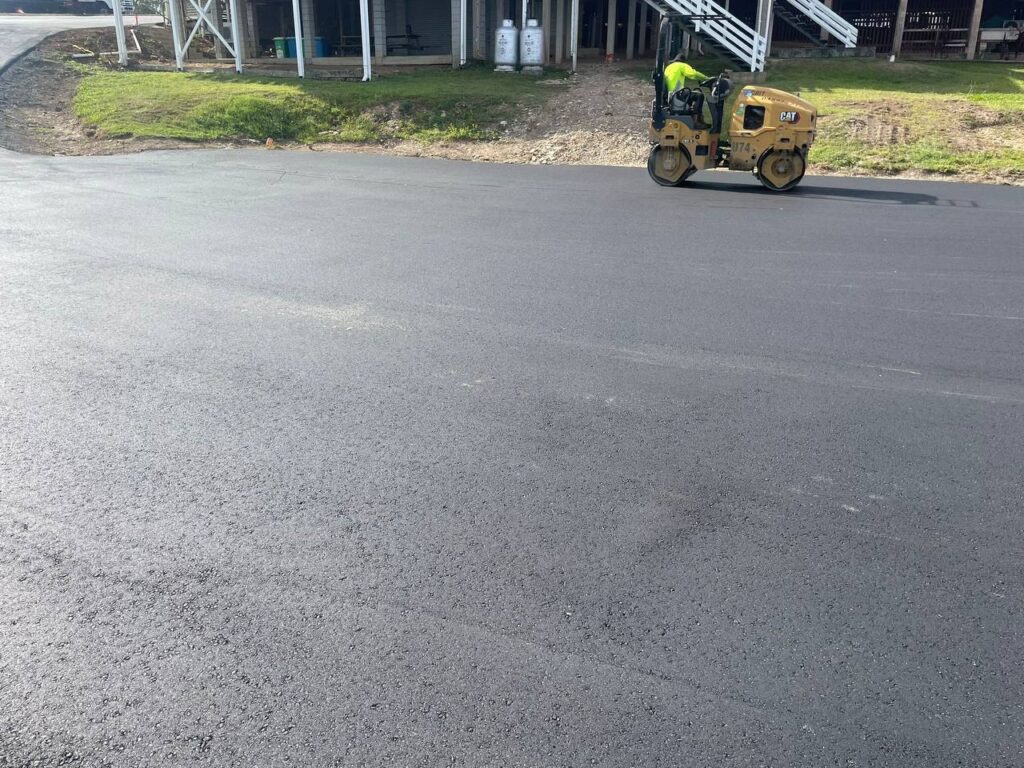
Loading areas are among the most demanding surfaces on commercial and industrial properties. Frequent vehicle movements, heavy deliveries, repeated braking and tight manoeuvring can place considerable pressure on the pavement. Choosing an appropriate surfacing material is therefore essential for maintaining reliable access and reducing premature deterioration.
For businesses and commercial property owners in Caboolture, QLD, asphalt can be a suitable option for frequently used loading areas when the pavement is properly designed, constructed and maintained. However, its performance depends on factors such as vehicle weight, traffic frequency, turning movements, drainage and the stability of the supporting base.
Understanding these requirements can help determine whether asphalt is appropriate for a particular loading area and what preparation is necessary to achieve a durable result.
Can Asphalt Withstand Frequent Loading and Heavy Vehicle Traffic?
Asphalt is widely used for roads, commercial access routes, car parks and other areas that experience regular vehicle traffic. Its flexibility, relatively smooth finish and ability to accommodate different pavement designs make it a practical option for many commercial applications.
However, not every asphalt surface is constructed to withstand the same demands.
A loading area regularly used by delivery vehicles places different stresses on the pavement compared with a residential driveway or lightly used parking area.
The suitability of asphalt depends on the complete pavement structure, including the thickness and composition of the asphalt, the strength of the underlying base and the type of traffic expected.
Where these elements are properly considered, asphalt can provide a dependable surface for frequent commercial vehicle movements.
Why Loading Areas Place Greater Demands on Asphalt
Loading areas experience several types of pavement stress that are not always present on ordinary access roads.
Repeated Heavy Vehicle Loads
Commercial vehicles can place substantial loads on relatively small areas of pavement.
When vehicles repeatedly travel along the same wheel paths, the pavement must distribute those loads through the asphalt and supporting layers.
If the underlying pavement is inadequately prepared, repeated loading can contribute to rutting, settlement and cracking.
Frequent Braking and Acceleration
Loading areas often require vehicles to slow down, stop and accelerate within confined spaces.
These movements can place additional stress on the asphalt surface, particularly where vehicles repeatedly follow the same route.
Tight Turning Movements
Delivery vehicles may need to turn sharply when entering loading bays or manoeuvring around buildings.
Tyres generate lateral forces during these movements, which can place considerable stress on the wearing surface.
Areas subjected to repeated tight turns may require particular attention during pavement design and material selection.
Stationary Vehicle Loads
Vehicles may remain parked in loading positions for extended periods.
Concentrated loads from stationary vehicles, particularly in warm conditions, can contribute to deformation if the asphalt mixture and supporting pavement are not suitable.
This is why loading bay positions should be assessed separately from areas used primarily for moving traffic.
The Importance of a Strong Pavement Foundation
One of the most important factors influencing asphalt performance is the quality of the supporting pavement.
The asphalt wearing surface forms only part of the complete structure. The layers underneath distribute vehicle loads and provide the stability required for regular use.
If the supporting material is weak, poorly compacted or affected by moisture, the asphalt may begin deforming even when the surface itself was installed correctly.
Professional preparation may involve:
- Assessing the existing ground conditions
- Removing unsuitable or unstable material
- Establishing appropriate pavement levels
- Installing suitable base material
- Compacting the pavement in appropriate layers
- Addressing drainage requirements
- Preparing the surface for asphalt installation
The precise preparation depends on the site and expected traffic demands.
A properly constructed foundation helps the pavement resist movement and supports more consistent long-term performance.
Asphalt Thickness Should Reflect the Intended Use
Asphalt thickness is an important consideration for frequently used loading areas.
A surface designed for light vehicles may not provide adequate performance when subjected to regular heavy deliveries.
However, simply installing a thicker asphalt layer does not automatically resolve inadequate pavement support.
The required pavement structure depends on several factors, including:
- Expected vehicle weights
- Number of daily vehicle movements
- Existing ground conditions
- Strength of the pavement base
- Turning and braking activity
- Drainage
- Areas of concentrated loading
An experienced asphalt contractor can assess these factors and determine an appropriate pavement construction method.
Why Compaction Matters for Commercial Asphalt
Compaction is essential during both pavement preparation and asphalt installation.
A properly compacted base provides stable support, while adequate asphalt compaction helps the finished surface achieve the intended density and performance.
Insufficient compaction can leave the pavement more vulnerable to movement under repeated traffic.
This may contribute to:
- Wheel rutting
- Surface depressions
- Uneven sections
- Premature cracking
- Localised settlement
- Pothole development
Professional installation involves selecting suitable materials, placing them correctly and achieving appropriate compaction throughout the construction process.
Drainage Is Essential for a Durable Loading Area
Loading areas need effective drainage to prevent water from collecting on the surface or entering the supporting pavement.
Standing water can become particularly problematic where heavy vehicles repeatedly travel over the same sections.
If moisture reaches weakened pavement material, the supporting layers may lose stability. Continued traffic loading can then contribute to cracking, settlement or potholes.
Correct drainage begins with suitable surface levels.
The loading area should be designed to direct rainfall towards appropriate drainage points without creating unnecessary depressions or interfering with vehicle movements.
Why Surface Levels Need Careful Planning
Loading areas often have specific operational requirements.
Vehicles may need to align with loading bays, reverse towards buildings or remain stationary while goods are transferred.
The pavement must therefore provide suitable access while maintaining effective drainage.
Poorly planned levels can create low sections where water collects, increasing the likelihood of deterioration.
Professional pavement preparation considers both the practical use of the loading area and how rainfall will move across the finished surface.
Can Asphalt Resist Frequent Turning Movements?
Asphalt can accommodate turning traffic, but repeated tight manoeuvring creates additional demands.
When heavy vehicles turn slowly, their tyres can place significant shear forces on the pavement surface.
If the asphalt mixture or supporting structure is unsuitable, these forces may contribute to surface displacement, scuffing or deformation.
For loading areas with particularly demanding turning movements, the contractor should assess whether asphalt is appropriate throughout the site or whether certain sections would benefit from a different pavement treatment.
Selecting the correct surface for the actual operating conditions is more important than using one material across every area.
What Are the Benefits of Asphalt for Loading Areas?
When properly designed and installed, asphalt offers several practical advantages for commercial loading areas.
A Consistent Surface for Vehicle Movements
A correctly constructed asphalt surface can provide a relatively smooth and uniform area for delivery vehicles.
This can make regular access and manoeuvring more predictable than travelling across a heavily worn or uneven surface.
Reduced Loose Surface Material
Unsealed loading areas can experience aggregate displacement, dust and surface irregularities from frequent traffic.
Asphalt creates a bound wearing surface, reducing the direct disturbance of loose pavement material.
Defined Access and Loading Areas
A properly surfaced loading area can help establish clear vehicle routes and practical working spaces.
This is particularly useful where delivery vehicles regularly enter, turn and leave the same area.
Repair and Resurfacing Options
Asphalt surfaces can often be repaired when deterioration remains localised.
Where the existing pavement remains structurally suitable, resurfacing may also be considered to renew a worn wearing layer.
The appropriate treatment depends on the condition of the supporting pavement and the extent of the damage.
What Signs Indicate That a Loading Area Is Deteriorating?
Frequently used loading areas should be monitored for changes that may indicate developing pavement problems.
Warning signs include:
- Wheel ruts becoming increasingly visible
- Depressions forming beneath regular loading positions
- Cracking along vehicle routes
- Asphalt movement in turning areas
- Potholes developing
- Water collecting in low sections
- Surface material breaking away
- Previous repairs beginning to deteriorate
- Uneven areas affecting vehicle access
These defects can indicate that the asphalt wearing layer, supporting pavement or both require attention.
Identifying the cause is important before deciding on repairs or resurfacing.
Can an Existing Loading Area Be Resurfaced with Asphalt?
Asphalt resurfacing may be appropriate when the existing pavement remains stable but the wearing surface has deteriorated.
For example, an area with general surface wear, isolated defects or a rough finish may be suitable for resurfacing after the necessary preparation.
However, resurfacing is not a substitute for repairing structural pavement problems.
If the existing loading area contains deep rutting, significant settlement or widespread cracking caused by weak supporting material, additional work may be necessary.
A professional assessment should establish whether the existing pavement can support the proposed new asphalt surface.
When Are More Extensive Pavement Repairs Necessary?
Some loading areas develop defects that extend beyond the asphalt wearing layer.
Examples include:
- Repeated settlement in loading positions
- Deep wheel ruts
- Recurring potholes
- Significant deformation during turning
- Widespread structural cracking
- Soft or unstable pavement sections
These problems may indicate that the supporting pavement requires attention.
Where necessary, failed material should be removed and the affected section rebuilt before the finished asphalt surface is restored.
Addressing the underlying cause helps reduce the likelihood of the same defects returning.
Why Professional Asphalt Installation Matters
Frequently used loading areas require more careful planning than surfaces exposed to occasional light traffic.
An experienced contractor can assess how the site operates and identify the conditions that will influence pavement performance.
Important considerations include:
- The types of vehicles using the loading area
- Frequency of deliveries
- Expected loading demands
- Vehicle turning patterns
- Stationary loading positions
- Existing pavement condition
- Drainage requirements
- Suitable construction materials
- Preparation and compaction methods
This information helps determine whether asphalt is appropriate and how the pavement should be constructed.
The value of professional installation lies in matching the pavement design and preparation to the demands of the site rather than relying solely on the appearance of the finished surface.
How Can Businesses Help Maintain an Asphalt Loading Area?
Even a properly constructed commercial asphalt surface requires ongoing attention.
Regular observation can help identify developing defects before they become more extensive.
Useful maintenance practices include:
- Monitoring wheel paths for rutting
- Checking areas where heavy vehicles regularly stop
- Inspecting turning areas for surface movement
- Keeping drainage paths clear
- Watching for new cracks and potholes
- Assessing areas where water repeatedly collects
- Arranging repairs when localised deterioration becomes noticeable
Particular attention should be given to sections experiencing the greatest vehicle loading.
Addressing defects while they remain manageable can help preserve more of the existing pavement.
Is Asphalt Always the Best Choice for a Loading Area?
Asphalt can be suitable for many commercial loading areas, but it is not necessarily the most appropriate material for every situation.
Areas subjected to exceptionally high stationary loads, repeated tight turning or highly concentrated stresses may require a different pavement design or surface treatment.
The correct decision depends on the operating conditions rather than the size of the area alone.
A professional assessment can establish whether asphalt will provide suitable performance or whether particular sections require an alternative approach.
This ensures that the surface is selected according to the practical demands of the property.
Professional Asphalt Surfacing for Loading Areas in Caboolture, QLD
A reliable loading area depends on more than the final asphalt finish. Pavement strength, drainage, vehicle movements, compaction and appropriate material selection all influence how the surface performs under regular commercial use.
Caboolture Surfacing Solutions provides professional asphalt and bitumen surfacing services in Caboolture, QLD, with attention to the preparation and construction requirements of commercial vehicle areas.
Whether an existing loading area requires repairs, resurfacing or more extensive pavement preparation, assessing its condition and intended use helps determine an appropriate approach.
Conclusion
Asphalt can be a suitable surface for frequently used loading areas when the pavement is designed and constructed to accommodate the expected traffic demands.
Its suitability depends on factors such as vehicle weight, repeated loading, turning movements, drainage and the stability of the underlying pavement. Correct base preparation, appropriate asphalt selection and effective compaction are essential for achieving reliable performance.
Where loading areas experience particularly concentrated stresses, the pavement design may need to be adapted, and alternative treatments may be appropriate for certain sections.
For commercial properties in Caboolture, QLD, Caboolture Surfacing Solutions can assess existing loading areas and recommend suitable asphalt repairs, resurfacing or pavement preparation. Professional assessment and installation can help create a more stable, practical and dependable surface for regular commercial vehicle movements.
Call us on: 07 3113 9873
Click here to find out more about Caboolture Surfacing Solutions
Click here to complete our contact form and see how we can help with your driveway needs.