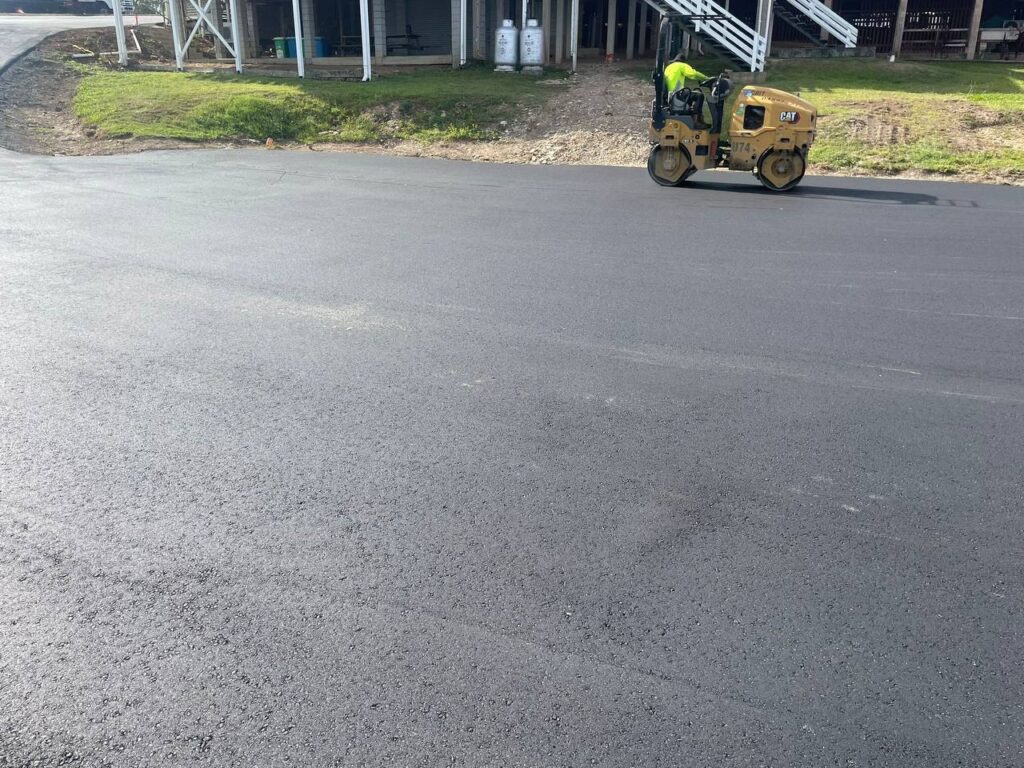
A driveway, access road or hardstand that constantly requires attention can become increasingly frustrating to use. Recurring potholes, loose gravel, uneven sections and poor drainage can make routine vehicle movements uncomfortable while allowing the surface to deteriorate further. Although occasional maintenance is expected with most outdoor surfaces, repeated problems may indicate that the existing pavement is no longer suitable for the demands placed on it.
Professional asphalt surfacing can provide an effective solution for many difficult-to-maintain areas. By creating a smooth, continuous wearing surface over a properly prepared foundation, asphalt can reduce some of the recurring problems associated with loose or deteriorating materials. At Caboolture Surfacing Solutions, we provide professional asphalt and bitumen surfacing throughout Caboolture, QLD, helping property owners improve the condition, functionality and long-term performance of their driveways, roads and access areas.
How Asphalt Can Make a Difficult-to-Maintain Surface More Reliable
Why Do Some Surfaces Require Constant Maintenance?
A surface that repeatedly develops the same problems may be experiencing more than ordinary wear.
Unsealed driveways and access roads can gradually lose their original shape as vehicles displace loose material. Rainfall can wash away finer particles, while repeated traffic creates wheel ruts, potholes and uneven sections.
Existing sealed surfaces can also become difficult to maintain when cracking, ageing or underlying pavement movement causes defects to return.
Common warning signs include:
- Potholes that reappear after repairs
- Loose gravel accumulating along the edges
- Deep wheel ruts
- Uneven or sunken sections
- Water collecting after rainfall
- Surface material washing away
- Frequent grading requirements
- Cracking that continues to spread
Identifying why these problems occur is important before deciding whether asphalt is the appropriate improvement.
Asphalt Creates a Continuous Wearing Surface
One of the main advantages of asphalt is that it forms a continuous, compacted pavement layer rather than relying on loose surface material.
On an unsealed driveway or access road, repeated vehicle movements can gradually push gravel away from heavily travelled sections. This often creates uneven wheel paths and loose material that requires regular redistribution.
Asphalt provides a bound wearing surface that is less susceptible to this type of displacement.
When installed over a stable foundation, it can create a more consistent surface for regular vehicle access and reduce the need for maintenance associated with loose gravel.
Can Asphalt Reduce Recurring Pothole Problems?
Asphalt can help reduce some of the conditions that contribute to pothole formation, particularly when replacing a deteriorating unsealed surface.
Potholes often develop where water and vehicle movements disturb loose or weakened pavement material. Once a depression forms, traffic can progressively enlarge the damaged area.
A properly constructed asphalt surface provides a compacted wearing layer that helps protect the supporting pavement from direct exposure to traffic and rainfall.
However, asphalt will not automatically prevent potholes if the underlying base remains unstable.
Existing soft areas, damaged pavement sections and drainage problems must be addressed before the new asphalt is installed.
How Does Asphalt Improve an Uneven Surface?
Uneven driveways and access areas can make everyday vehicle movements uncomfortable and contribute to further deterioration.
Asphalt construction provides an opportunity to establish a more consistent surface profile.
Before installation, the existing area can be assessed and prepared to correct suitable irregularities, improve levels and establish a stable foundation.
The finished asphalt is then placed and compacted to create a smooth, trafficable surface.
Where unevenness is caused by significant settlement or underlying pavement failure, additional corrective work may be necessary before asphalt can provide a reliable result.
Better Drainage Can Reduce Ongoing Surface Problems
Water is one of the most important factors affecting the condition of outdoor pavements.
When rainfall collects in depressions or flows across an unsuitable surface profile, it can contribute to erosion, softening and deterioration of the supporting material.
Asphalt can be constructed with appropriate falls to encourage water to drain away from the trafficable area.
This can help reduce standing water and limit direct moisture exposure to the pavement underneath.
However, effective drainage must be considered during the preparation and design stages. Simply laying asphalt over an area with existing drainage problems may allow those problems to continue.
Asphalt Can Reduce Loose Material and Dust
Loose gravel and dust are common maintenance concerns on unsealed driveways, access roads and hardstands.
Regular traffic can disturb fine particles, particularly during dry conditions. Surface material may also be displaced towards the edges, leaving heavily used sections uneven.
Asphalt creates a bound surface that significantly reduces the movement of loose material under normal traffic conditions.
This can make the area easier to keep tidy and provide more consistent access for vehicles.
For property owners dealing with repeated gravel displacement or dusty access routes, asphalt may offer a practical improvement.
Why Is Base Preparation Essential?
The performance of an asphalt surface depends heavily on the pavement underneath it.
A new asphalt layer cannot compensate for a foundation that is poorly compacted, unstable or extensively damaged.
Before installation, the supporting pavement may require:
- Removal of unsuitable material
- Repairs to weak sections
- Grading and levelling
- Additional suitable pavement material
- Drainage improvements
- Thorough compaction
- Preparation of a consistent surface profile
These stages help establish a stable foundation capable of supporting the asphalt and the vehicles using it.
At Caboolture Surfacing Solutions, we recognise that proper preparation is just as important as the quality of the finished asphalt layer.
Can Asphalt Improve a Frequently Used Driveway?
Driveways that experience regular vehicle movements need a surface capable of maintaining its shape under repeated use.
Loose or deteriorating materials can develop wheel ruts, depressions and potholes, particularly where vehicles follow the same paths every day.
A professionally constructed asphalt driveway provides a smooth, compacted surface that can accommodate regular traffic when the pavement has been designed and prepared appropriately.
It can also improve the overall appearance of the property while reducing some of the maintenance associated with an unsealed surface.
The expected vehicle loads and existing ground conditions should be considered before installation.
Is Asphalt Suitable for Access Roads?
Asphalt can be an effective surfacing option for access roads that have become difficult to maintain.
Longer access routes may develop corrugations, loose material and repeated potholes, making vehicle movements increasingly uncomfortable.
Asphalt provides a continuous wearing surface that can improve driving consistency and reduce the need for repeated grading.
However, access roads must have a suitable pavement structure and drainage arrangement to support the intended traffic.
Where heavier vehicles or frequent movements are expected, these requirements become particularly important.
Can Asphalt Improve a Worn Hardstand?
Hardstands often experience concentrated vehicle loads, turning movements and repeated use.
If the existing surface begins to rut, settle or break apart, maintaining a consistent working area can become difficult.
Asphalt may provide a suitable improvement where the pavement is designed to accommodate the expected loads and operating conditions.
Preparation should consider the existing base, vehicle weights, turning areas and drainage.
For hardstands carrying particularly heavy or stationary loads, the suitability of asphalt and the required pavement design should be assessed carefully.
Does Asphalt Eliminate the Need for Maintenance?
No surface is completely maintenance-free, including asphalt.
Although asphalt can reduce several recurring problems associated with loose or deteriorating surfaces, it still requires appropriate care.
Over time, asphalt may experience weathering, cracking or localised wear.
Regular inspections can help identify developing defects before they become more extensive.
Maintenance may involve:
- Repairing small cracks
- Addressing isolated potholes
- Keeping drainage paths clear
- Monitoring areas of settlement
- Repairing damaged edges
- Considering resurfacing when the wearing layer becomes significantly worn
The advantage of a properly constructed asphalt surface is that it can provide a stable, consistent pavement that is easier to manage through planned maintenance.
When Is Asphalt Resurfacing Better Than New Construction?
Not every difficult-to-maintain surface requires complete reconstruction.
If an existing asphalt pavement remains structurally sound but its wearing layer has become aged or damaged, resurfacing may be appropriate.
This involves preparing the existing pavement and installing a new asphalt layer over the serviceable structure.
However, resurfacing is not suitable for every situation.
Where the underlying base has failed, substantial repairs or reconstruction may be necessary before a reliable surface can be established.
Professional assessment helps determine whether resurfacing, targeted repairs or new asphalt construction is the most appropriate solution.
What If the Same Problems Keep Returning?
Repeated deterioration is often a sign that the underlying cause has not been fully addressed.
For example, potholes may continue forming where water enters weakened pavement material. Wheel ruts may return where the base is unstable or unsuitable for the vehicle loads.
Simply placing new material over these defects may temporarily improve the appearance without resolving the problem.
A professional assessment should consider the pavement structure, drainage, surface condition and intended use.
Addressing these factors before asphalt installation can help prevent existing weaknesses from affecting the finished surface.
How Can You Tell If Asphalt Is the Right Improvement?
Asphalt may be worth considering when an existing surface is becoming increasingly difficult to maintain and the recurring problems affect everyday use.
Signs that a professional assessment may be beneficial include:
- Repeated grading is needed to maintain a usable surface
- Potholes continue returning
- Loose material is frequently displaced
- Vehicle movements are becoming uncomfortable
- Drainage problems are contributing to deterioration
- The existing surface no longer suits regular traffic
- Widespread wear is making individual repairs less effective
These conditions do not automatically mean asphalt is required, but they can indicate that a more substantial surfacing improvement should be considered.
Why Choose Professional Asphalt Installation?
Successful asphalt construction involves much more than placing a new layer over an existing surface.
The condition of the foundation, preparation methods, drainage, asphalt placement and compaction all influence the finished pavement.
Experienced contractors assess these factors before recommending the appropriate work.
Professional installation helps ensure that the new surface is suited to its intended use and that existing weaknesses are addressed rather than simply concealed.
A carefully prepared and constructed pavement is better positioned to provide reliable service over time.
Professional Asphalt Surfacing in Caboolture, QLD
When a driveway, access road or hardstand becomes difficult to maintain, choosing the right improvement can make a significant difference to its everyday usability.
Caboolture Surfacing Solutions provides professional asphalt and bitumen surfacing services throughout Caboolture, QLD.
We assess existing pavement conditions, identify areas of deterioration and recommend appropriate preparation, repairs, resurfacing or new asphalt construction.
Our focus is on delivering practical, durable surfaces through thorough preparation and professional workmanship.
Whether the existing area is affected by potholes, loose material, uneven sections or general deterioration, the aim is to provide a surfacing solution that addresses the actual condition of the pavement.
Conclusion
Asphalt can significantly improve a surface that has become difficult to maintain, particularly where recurring potholes, loose gravel, uneven sections and surface erosion are affecting regular vehicle access.
By creating a continuous, compacted wearing surface, asphalt can reduce material displacement, improve driving comfort and provide a more consistent area for everyday use. When combined with suitable drainage and a stable foundation, it can also help protect the supporting pavement against further deterioration.
However, the success of asphalt surfacing depends on correct assessment and preparation. Existing structural weaknesses, poor drainage and unstable material must be addressed before a new surface is installed.
If your driveway, access road or hardstand in Caboolture, QLD requires constant attention, contact Caboolture Surfacing Solutions. We can assess the existing pavement and recommend whether professional asphalt installation, resurfacing or targeted repairs would provide the most suitable improvement.
Call us on: 07 3113 9873
Click here to find out more about Caboolture Surfacing Solutions
Click here to complete our contact form and see how we can help with your driveway needs.